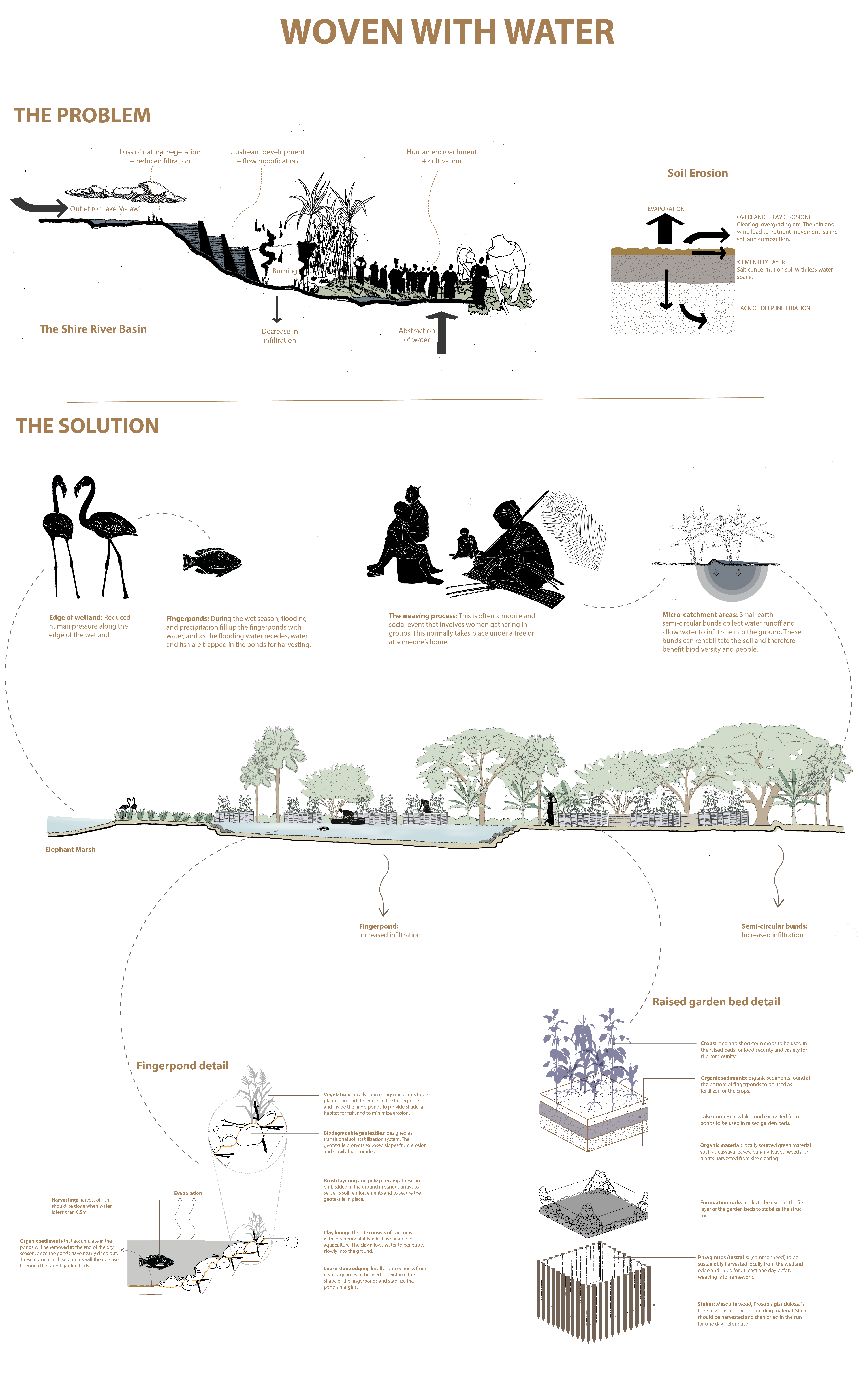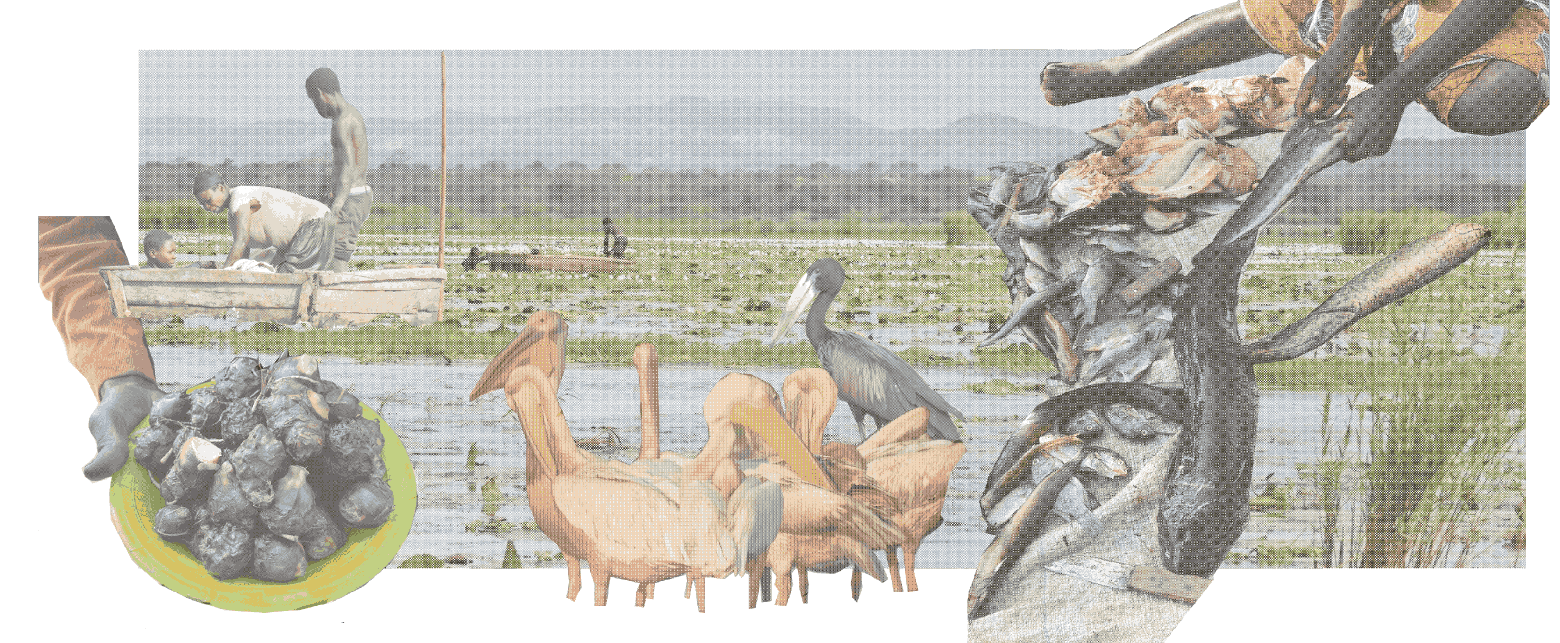
The project is located in Malawi’s Elephant Marsh, a seasonal wetland on the Lower Shire River floodplain and one of the country’s most productive ecosystems. It sustains thousands of households through agriculture, fishing, and foraging, serving as a critical resource, especially during droughts and poor harvests. However, upstream development, commercial sugarcane farming, and human encroachment have led to severe land degradation, including soil erosion, sedimentation, and deforestation. These changes have reduced natural areas and disrupted the wetland’s ability to regulate water, making it highly vulnerable to climate change. As a result, the region now experiences extreme droughts and floods, driven by declining infiltration and water-holding capacity.
The proposed fingerpond system aims to foster a symbiotic relationship between the wetland’s edge and the cultural heritage of the community. This integrated aquaculture and agriculture approach preserves the ecological functions of wetlands while simultaneously addressing the socio-economic needs of the community, including livelihoods, costs, and benefits. It harmonizes the biophysical aspects of the site—such as water, fish, soil, and inputs—with the community’s socio-cultural practices.
The system operates as follows: During the second half of the dry season, earthen ponds, known as fingerponds, are dug, and raised garden beds are constructed between these ponds by the local community at the wetland’s edge—an area that regularly floods and recedes. During the wet season, flooding and rainfall fill the fingerponds with water. As the floodwaters recede, fish and water remain trapped within the ponds.
In the early dry season, the ponds undergo infiltration and evaporation. At this stage, feeding the trapped fish becomes essential. Animal manure and green materials can be placed in small bags at the corners of each pond to serve as fish feed. When the water levels drop to 0.5 meters, the fish are harvested using traditional fishing tools, such as reed basket traps and seine nets. As the dry season progresses, the fingerponds gradually dry out through evaporation and infiltration, and the organic matter from the pond system can be used as fertilizer for the crops in the raised garden beds.
This system has multiple advantages: it sustains fish growth and provides a continuous supply of fish during the dry season, while the raised garden beds offer a steady supply of crops. Crucially, it preserves the wetland’s hydrology by maintaining its natural flooding cycle, without disrupting the wetland’s essential functions.
Additionally, the design of the raised garden beds is inspired by Mexico’s ancient chinampa system, a form of agricultural innovation created by constructing a boundary of stakes anchored to the lakebed. Reeds are woven into these stakes to form a container, which is then filled with layers of organic materials such as aquatic plants, lake mud, and other sediments. Over time, this organic matter transforms into fertile soil, ideal for growing crops.
Furthermore, in maintaining the system and managing it on a daily basis by the community, the project not only helps preserve the traditional weaving craft but also creates new opportunities for innovative practices that go beyond mere restoration efforts.