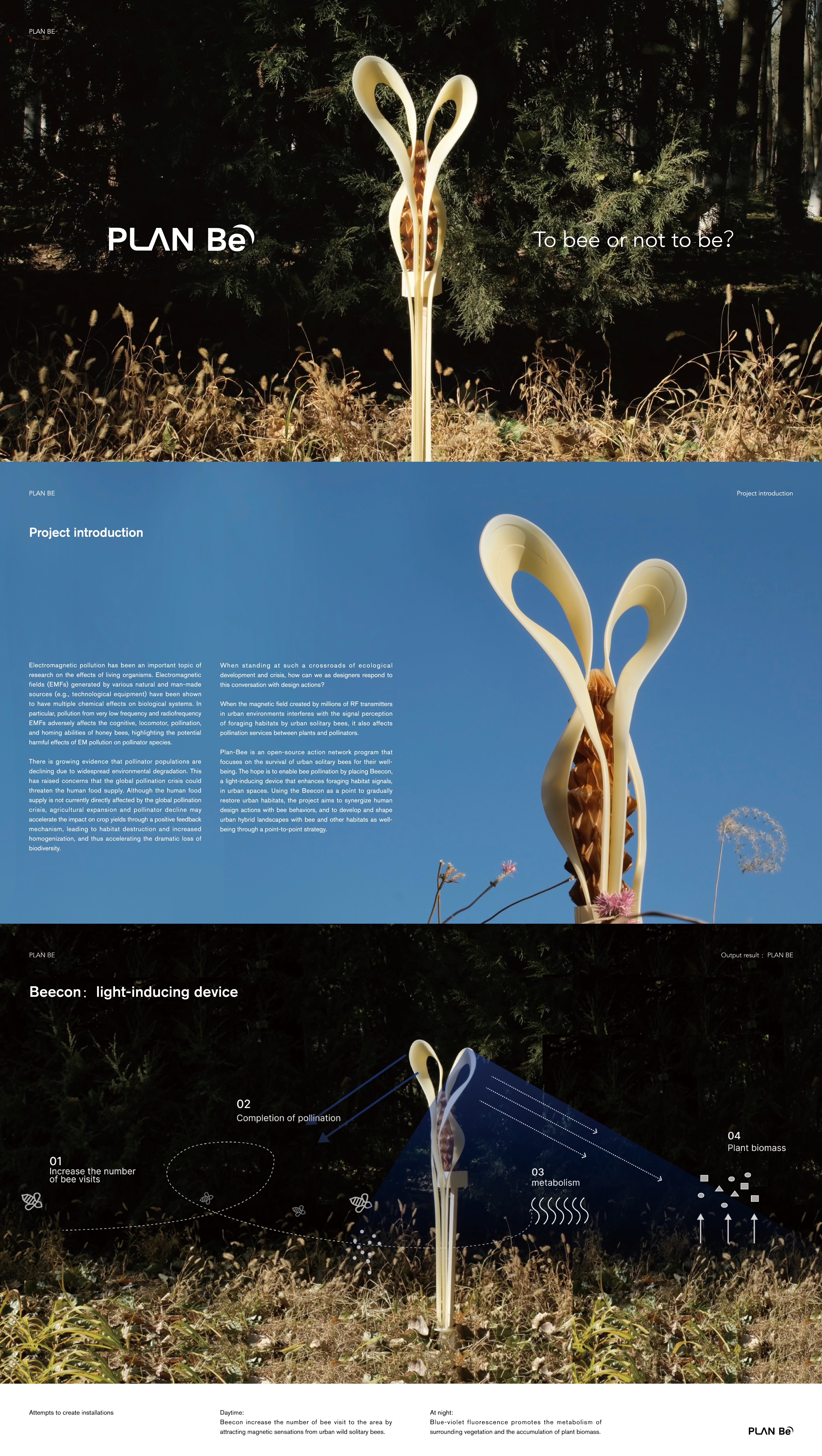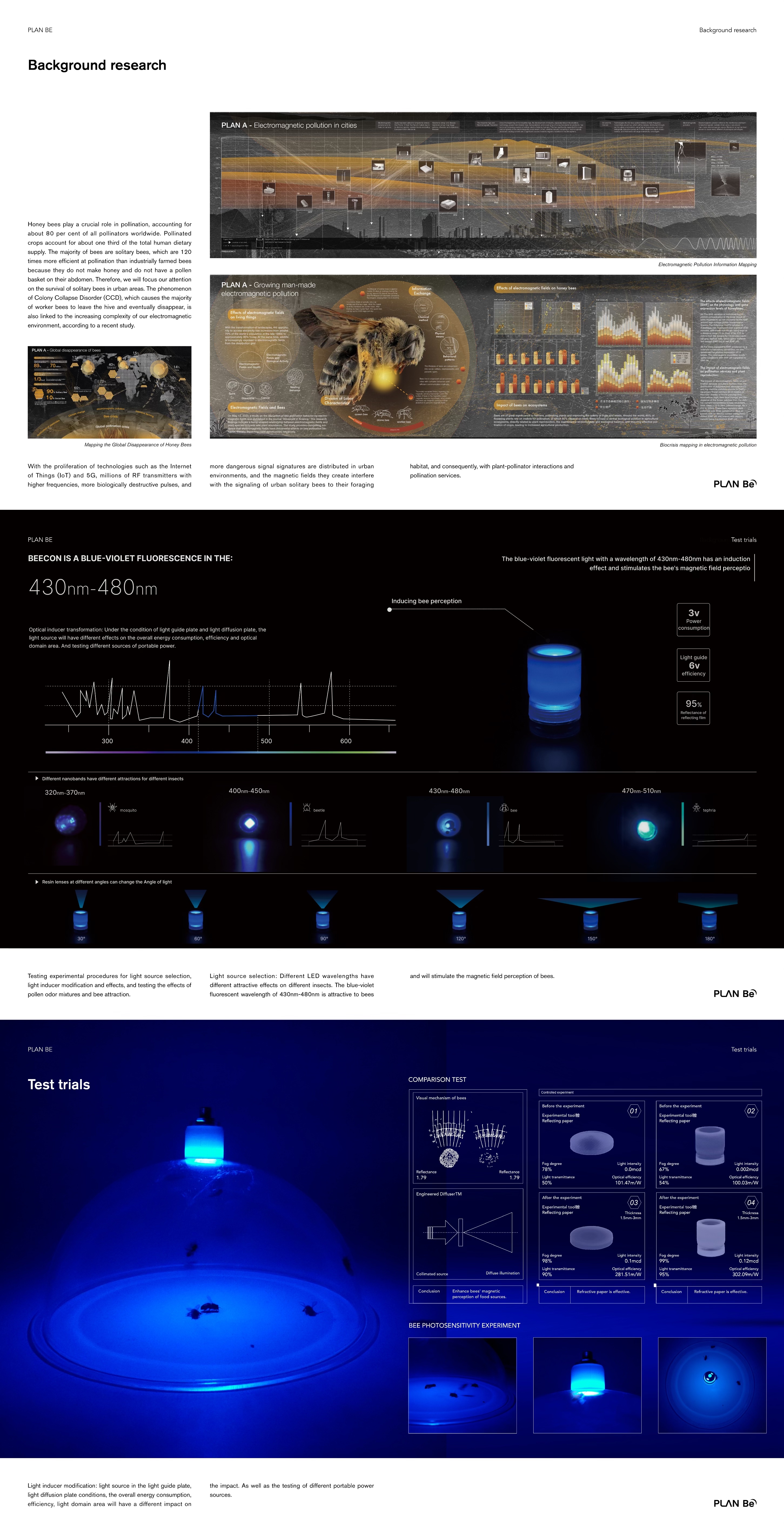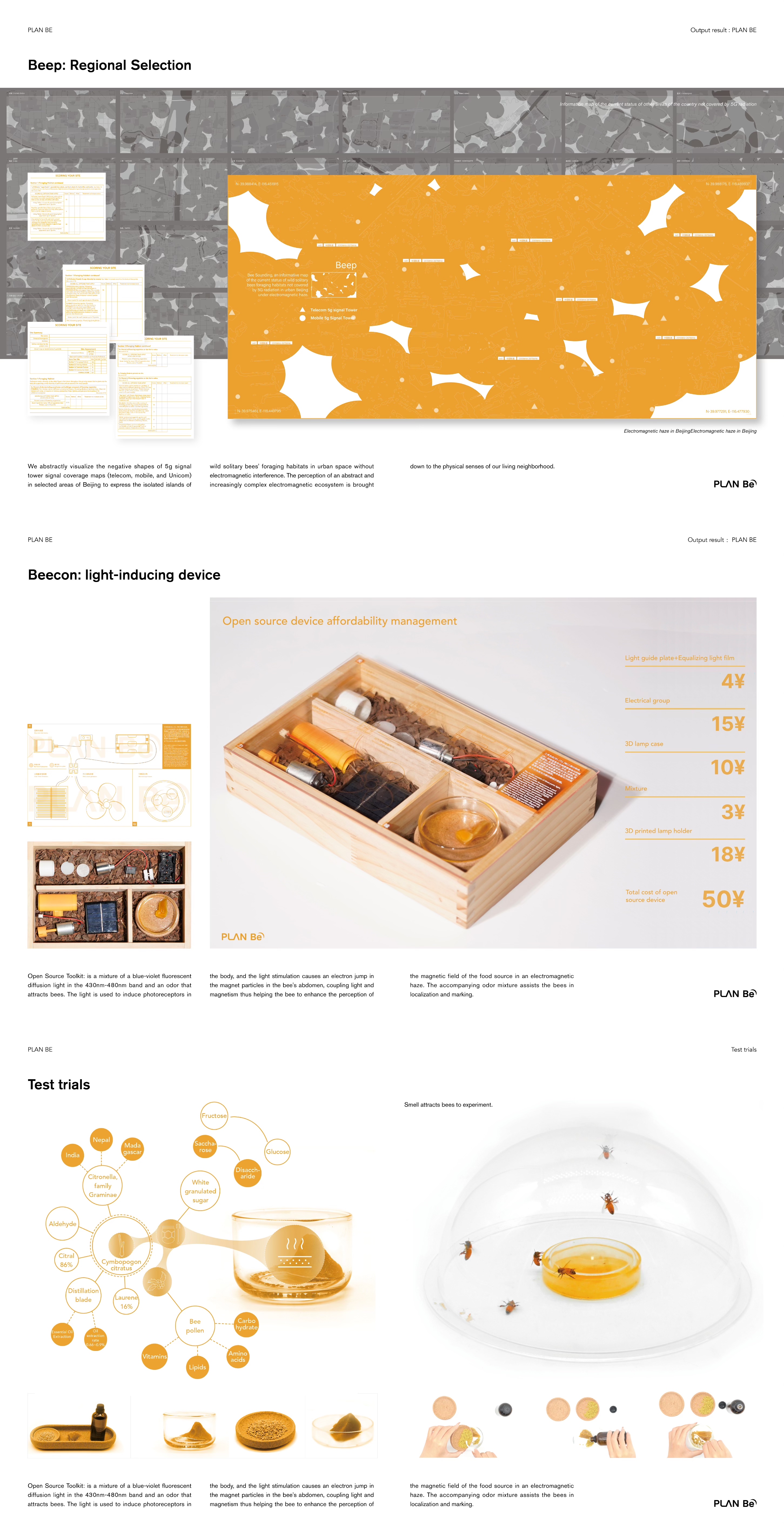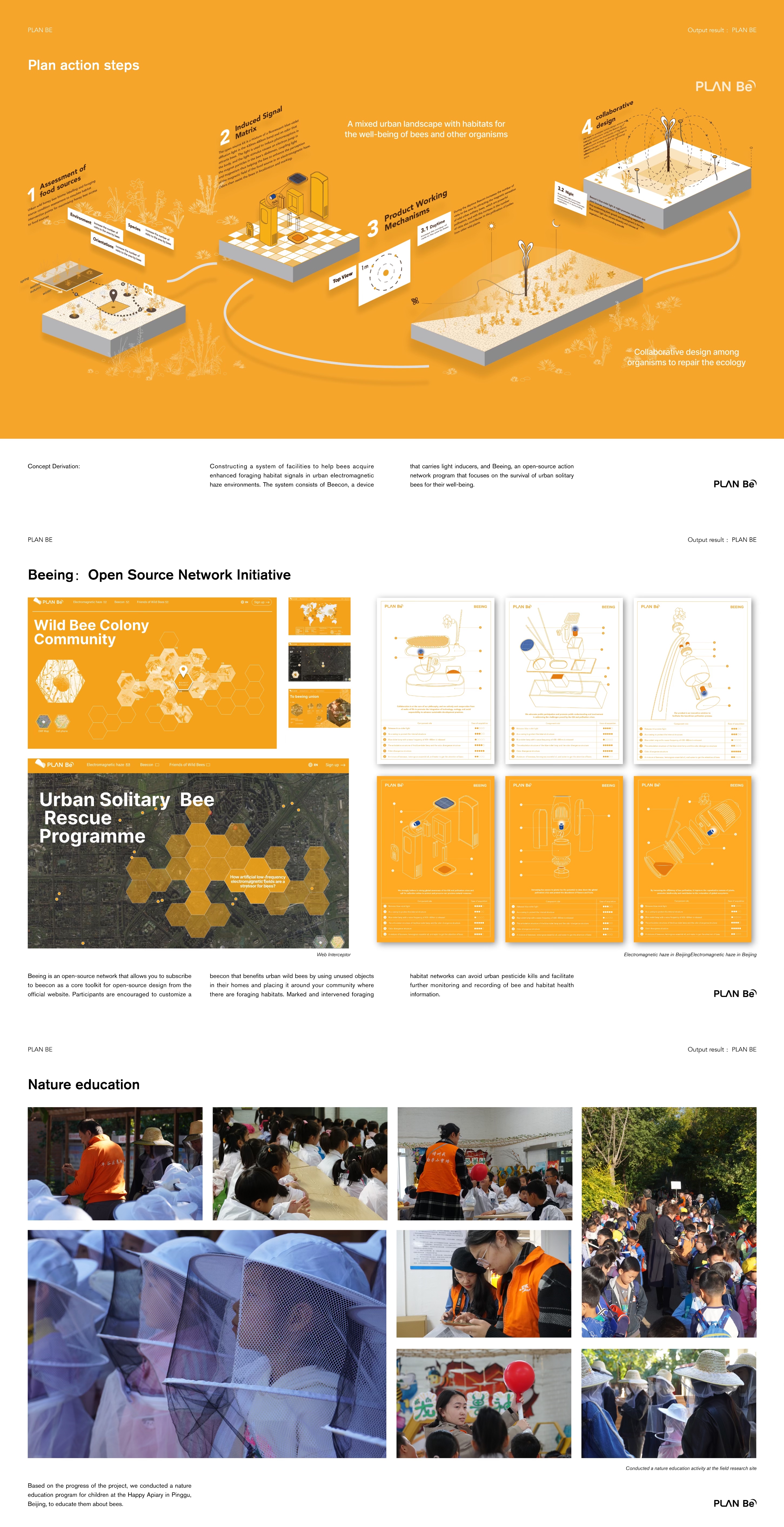
The Plan-Be project addresses the adverse effects of urban electromagnetic pollution on solitary urban bees, particularly its disruption of their pollination behavior and ability to perceive habitat signals. By enhancing the interaction between plants and pollinators, the project aims to mitigate ecological imbalances and biodiversity loss caused by such disruptions. Plan-Be specifically tackles challenges stemming from the proliferation of radio frequency transmitters and modern communication technologies (e.g., IoT and 5G), helping bees reorient themselves within polluted environments, locate foraging habitats, and improve pollination efficiency.
The magnetic fields created by millions of RF transmitters in urban environments interfere with the signal perception of foraging habitats by urban solitary bees, thus also affecting pollination services between plants and pollinators.
Plan-Be is an open-source action network program with the survival of urban solitary bees as its well-being. The hope is to enable bee pollination in the midst of environmental challenges by placing Beecon, a light-inducing device that enhances signals from foraging habitats, in urban spaces. Using Beecon as a point to gradually restore urban habitats, we will synergize human design actions with the biological behavior of honey bees, and develop and shape urban hybrid landscapes with the well-being of honey bees and other habitats as a point-to-point strategy.
The global pollination crisis under electromagnetic haze is a pressing issue. We hope that beecon, as a response to environmental change, raises awareness about practical tools and solutions.