
The accelerating effects of climate change are causing extreme biodiversity loss and ecosystem degradation, particularly in urban areas where dense development and destructive human activity disrupts habitats and threaten vital pollinator and keystone species. Urban sprawl and the urban heat island effect intensify the effects of climate change by degrading and fragmenting habitats, increasing energy consumption, and reducing air quality. This impacts both urban residents and natural ecosystems by reducing green spaces, diminishing air and water quality, and weakening cities’ resilience to climate change impacts, like flooding and extreme temperatures. The rising global urban population, projected to reach 68% by 2050, underscores the need for biodiversity-friendly urban planning.
As cities grow, the way they develop is having serious consequences on biodiversity and climate change. What if we could change direction? Imagine a future where urban life and the natural world don’t just coexist but thrive together. To do this, we need to do more than simple “green” our cities, and instead to rethink the relationship between nature and urban environments at a fundamental level.
In this future, nature isn’t just added as decoration—it’s at the core of how we design and build our cities. This vision transforms urban spaces into environments that improve human well-being, restore biodiversity, and meet key Sustainable Development Goals.
This future can’t be achieved over night, but by implementing some of the following changes, we can work to reach it by 2050.
RESTORING BIODIVERSITY
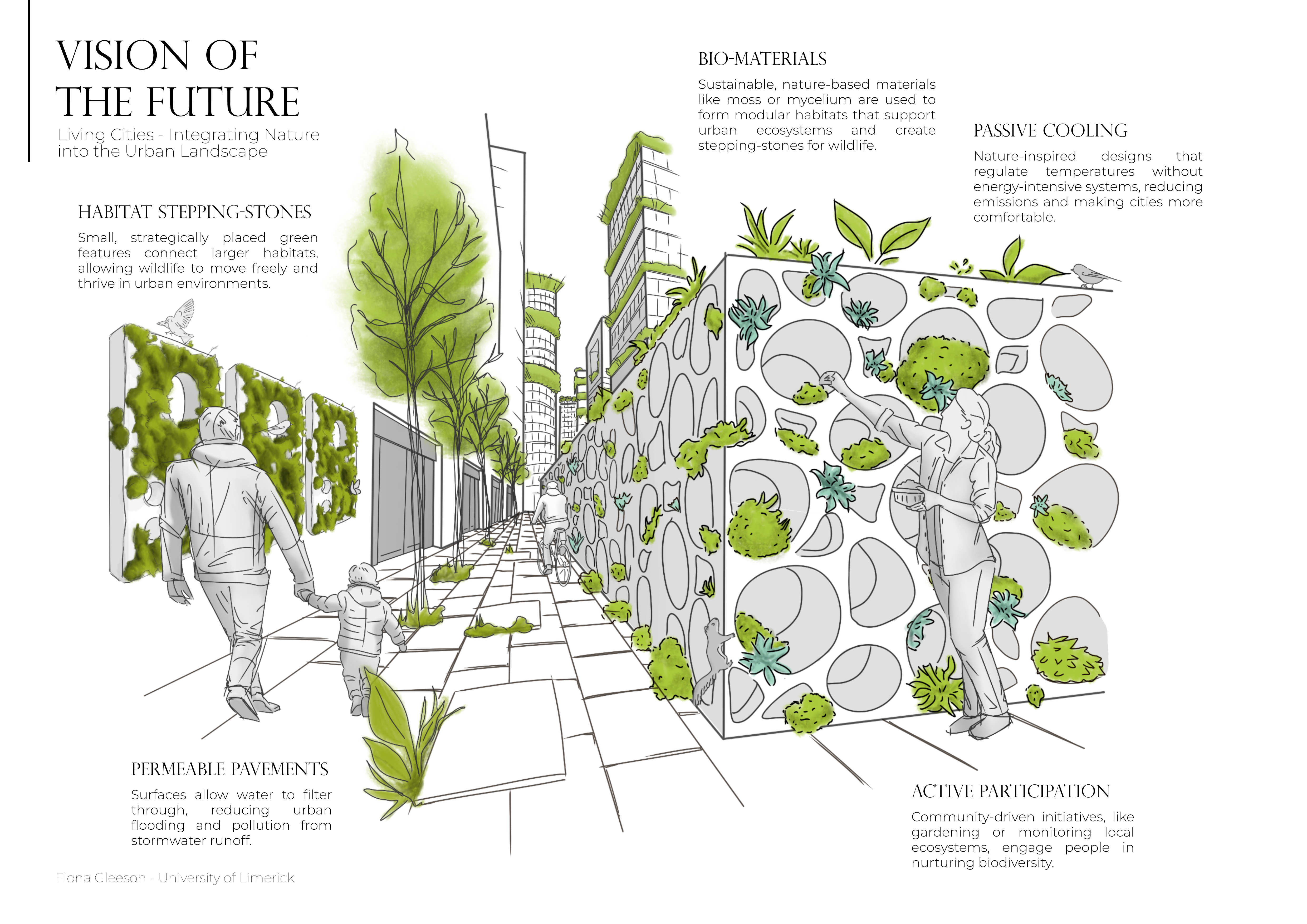
Imagine the sounds of running water, bees buzzing and birds chirping in their nests as you pass through the city. In this future, cities reconnect fragmented ecosystems with green corridors, vertical forests, and habitat stepping-stones that bridge the gaps between larger green spaces. Urban planning ensures that native plants and animals thrive alongside human developments. Parks are reimagined as biodiverse havens, supporting flora and fauna while enhancing residents’ connection to nature.
ACTIVE PARTICIPATION WITH NATURE
In this vision, urban residents have hands-on experiences with nature in their day-to-day lives. As you walk through each neighborhood, you see the residents’ culture, creativity, and personal touches have shaped their surroundings. Some areas may focus on community gardens for growing herbs or vegetables, while others grow flowers and green facades that provide habitats and decorate their surroundings. Educational programs teach people to grow native plants, monitor pollinators, and care for the environment.
PASSIVE COOLING
Picture a city with lush, green rooftops and walls, shaded walkways, and bright buildings that reflect heat. Urban architecture will take inspiration from natural systems to stay cool without relying heavily on energy-intensive air conditioning. Green roofs and walls, and reflective surfaces will prevent the urban landscape from absorbing too much heat. Nature-based solutions, like vents inspired by termite mounds and natural materials like terracotta clay, will improve airflow and insulation.
PASSIVE CARBON FILTRATION
Picture walls covered in moss and other vegetation that clean the air as you walk by, without the need for extensive maintenance. Streams run clean through parks, lined with lush plants that act as natural carbon filters. Moss walls, urban forests, and plant-covered facades filter pollutants and absorb carbon dioxide.
 Fiona Gleeson_Designing Futures 2050_support visuals_compressed.pdf