
Food waste is a critical global issue, with approximately 931 million tonnes of food wasted annually worldwide, contributing to 8-10% of global greenhouse gas emissions. At the household level, food waste accounts for a significant portion of this total, with 61% of global food waste originating from homes. In Ireland alone, an estimated 250,000 tonnes of food are wasted by households each year, costing Irish consumers an average of €700 annually. This waste not only represents lost resources and financial inefficiencies but also has severe environmental impacts, as wasted food decomposes in landfills, releasing methane—a greenhouse gas far more potent than carbon dioxide. This is a multifaceted problem driven by factors like over-purchasing, lack of knowledge about storage and expiration dates, and improper meal planning. As climate change intensifies and resources become scarcer, reducing food waste is becoming increasingly essential.
To achieve this vision, I initially conducted research and ideation to develop this holistic approach. I began by studying current kitchen environments, identifying inefficiencies and gaps in food preservation, particularly at the household level. This involved observing how people interact with food, what causes food to go to waste, and the role of kitchen design in influencing these behaviors. Primary research, including surveys and interviews were conducted by me with individuals across different cooking skill levels, to better understand food waste habits and attitudes toward food preservation. This research revealed that convenience, lack of awareness, and inadequate food storage practices were major contributing factors. I also explored secondary research, which included examining existing food waste solutions and the potential for natural preservation methods, such as clay pot coolers and natural dehumidifiers to see if there are less resource intensive ways of achieving the same solution.
To further see the extent of the current day barriers in self sustainability, I built my own hydroponic farm and discussed the challenges in relation of sourcing materials and exploring the feasibility of such a task. While the initial attempt faced some challenges, such as leaks and weather limitations, the experience provided valuable insights into the design of efficient and compact systems for urban homes, where space and resources are limited. The local village of Cloughjordan, who have the lowest carbon footprint in Ireland was also studied and referenced.
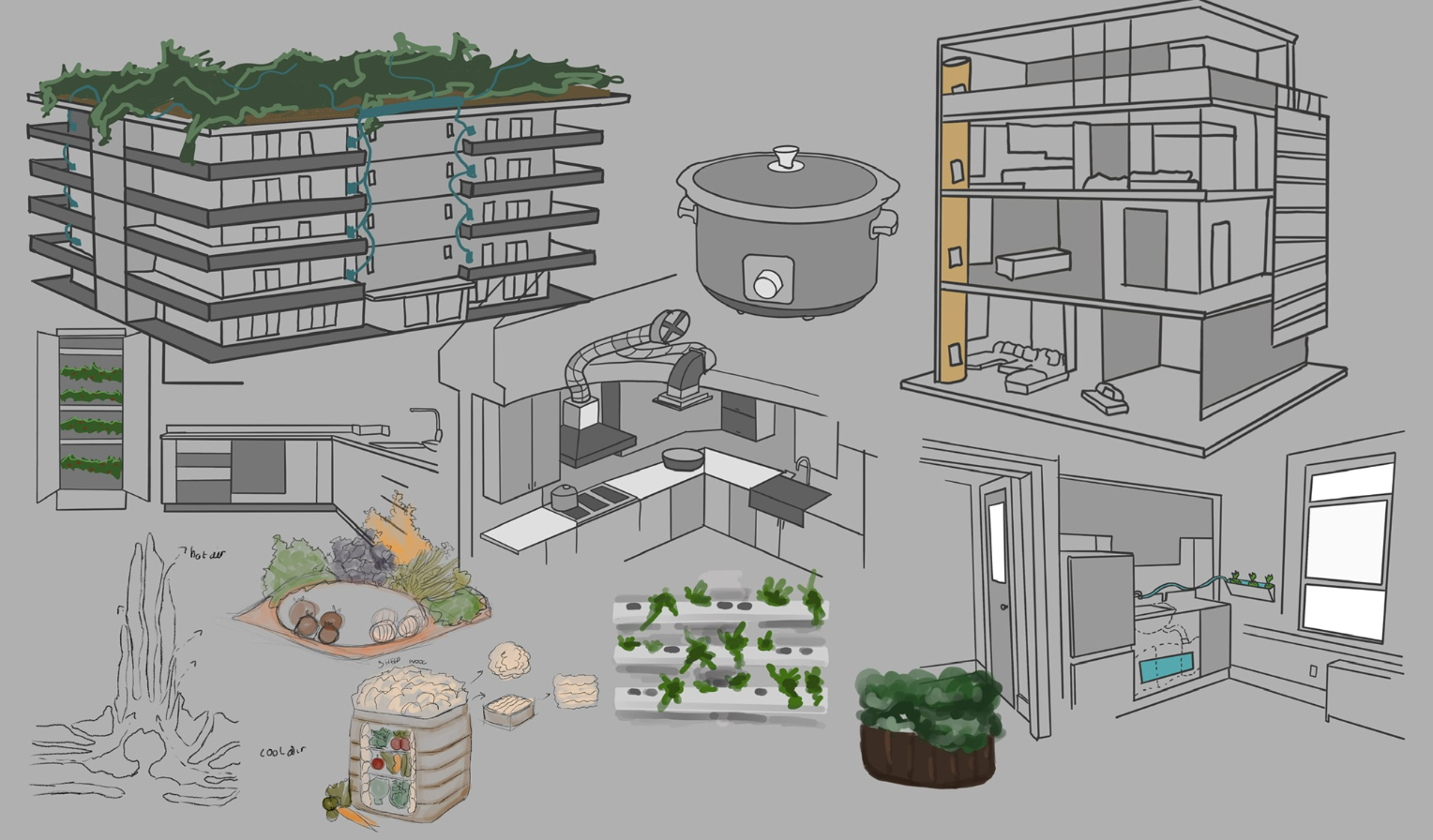
Building on these insights, I developed the concept of a “living kitchen” that integrates natural preservation techniques, such as passive cooling systems and hydroponic farming, to create a more sustainable food environment. Keeping food closer to home reduces waste, strengthens food security, and reconnects us with what we eat. I explore a multitude of incremental ideas that add up to the bigger picture. By 2050, 80% of the global population will reside in urban environments. Cities will transform into hubs of self-sustaining ecosystems where food preservation, water recycling, and energy efficiency are fully integrated into daily life.
Hydroponic systems are placed on windows for people to grow their own greens like vegetables and herbs, also provides coverage from intense heat and insulation during winter. Community resilience and participation is key as seen in Cloughjordan, a waste system can be incorporated into apartment buildings to supply fertilizer for a bigger community farm. The waste could therefore stay at it’s source and reduce impact. Seaweed farms will be located in homes to support food needs (becoming a new source of food in the future). It will be grown from the waste water of the taps. A dial is presented to avoid any cleaning chemicals going into the water. A slow cooker would be designed to capture excess steam and heat generated during regular cooking, redirecting it into a sealed, insulated chamber where food can cook slowly over time. As steam rises from boiling water or cooking food, it would be funneled into the slow cooker, maintaining a consistent low temperature ideal for stews, soups, and batch cooking. Other ideas also included; Antibacterial honey-comb shelves that help regulate the temperature and humidity for food, See-through fridge for easier awareness and access to food that needs to be kept cooler like milk etc, Lighting that turns food waste into luminous bacteria for extra lighting needed in the house and Moss farm growing from food scraps amongst others.
A multitude of these ideas are explored, but the main idea is not only aimed to reduce waste but also to foster greater consumer awareness and responsibility, empowering individuals to make more sustainable food choices. To make food valuable by driving the accountability back onto the consumer and making them appreciate the effort and work put into growing food. This vision aligns with the SDGs by promoting sustainable food practices, reducing waste, and enhancing food security. By encouraging responsible consumption, self-sufficiency, and innovative preservation techniques, the project directly supports SDG 2 (Zero Hunger), SDG 12 (Responsible Consumption and Production), and SDG 13 (Climate Action), helping to create more resilient and sustainable households that the future needs.
 THE FUTURE OF FOOD – EMILIA ZIOLEK.pdf